
The Emotional Impact of Struggling at School


When Struggle Becomes More Than Academic
Struggling at school is often first noticed through learning. A child may fall behind in reading, find maths increasingly difficult, or being to avoid certain subjects altogether. These signs are visible and measurable, which is why they tend to draw attention.
What is less visible - and often more significant - is the emotional impact that accompanies ongoing difficulty.
For many learners, struggle does not stay contained within the classroom task. It affects how they feel about school, about learning, and about themselves. Anxiety, frustration, and self-doubt can begin to surface long before attainment data signals a concern.
Some children cope quietly. Others show their distress more openly. In both cases, emotional responses are often early indicators that something is not working as it should.
Recognising when struggle has become more than academic is an important first step. It allows adults to respond with understanding rather than urgency - and to support the whole child, not just their performance.
Struggle Looks Different for Different Learners
There is no single way that struggling at school looks. For some learners, difficulties centre around reading, writing, or numeracy. For others, the challenge lies in attention, organisation, processing speed, communication, or managing the pace and demands of the school day.
Some children struggle with the academic content itself. Others find the social, sensory, or emotional demands of school overwhelming. Transitions, noise, expectations, and comparison can all contribute to feelings of stress or overload, even when academic ability is strong.
Importantly, a learner does not need a diagnosis to experience the impact of struggle. Many children fall into a grey area where they are "just about coping" - meeting expectations on the surface while expending a great deal of emotional energy to do so.
Because struggle looks different for each child, it is easy for emotional distress to be missed. When difficulty doesn't fit a familiar pattern, it can be mistaken for behaviour, personality, or lack of effort.
Recognising the many forms struggle can take helps adults respond with curiosity rather than assumptions - and creates space for more meaningful support.
How Struggle Shows Up Emotionally
When school becomes difficult, children often communicate this through their emotions and behaviour rather than words.
Anxiety is one of the most common signs. Learners may worry excessively about getting things wrong, seek constant reassurance, or express reluctance to attend school. For some, this anxiety is quiet and internalised; for others, it appears as visible distress.
Avoidance is another frequent response. A child might delay starting work, complain of feeling unwell, or disengage during lessons. These behaviours are often attempts to escape situations that feel overwhelming or threatening.
Some learners respond with frustration or anger. Emotional outbursts, tearfulness, or resistance can occur when a child feels stuck or misunderstood. These reactions are not signs of poor behaviour - they are expressions of stress.
Other children withdraw. They may become quieter, less confidence, or emotionally flat. Because these responses are less disruptive, they are sometimes overlooked, even though the emotional cost can be just as high.
Understanding these emotional signals helps adults recognise struggle earlier and respond in ways that support wellbeing as well as learning.
Behaviour as Communication
When children struggle at school, their behaviour often tells a story long before they are able to explain what they are feeling.
What adults may see as avoidance, defiance, or disengagement is frequently a form of communication. It is the child's way of signalling that something feels too hard, too confusing, or too overwhelming.
A learner who refuses to start work may be expressing anxiety about failure. A child who becomes disruptive may be reacting to frustration or a lack of understanding. A quiet, compliant child may be masking distress in order to cope.
These behaviours are not random. They are responses to an environment or expectation that is not meeting the child's needs.
Viewing behaviour as communication shifts the response from correction to curiosity. Instead of asking "How do we stop this behaviour?", the question becomes "What is this behaviour telling us?"
When adults respond with understanding rather than punishment, children are more likely to feel safe, supported, and ready to re-engage with learning.
The Cost of Being "Just About Coping"
Many learners who are struggling at school are not immediately identified as needing support. They are often described as managing, coping, or doing "just enough" to meet expectations.
On the surface, these children may appear fine. They attend school, complete work, and avoid drawing attention to themselves. Underneath, however, coping often comes at a significant emotional cost.
Maintaining this level of effort can be exhausting. Learners may be constantly monitoring themselves, masking confusion, or pushing through tasks that feel overwhelming. Over time, this can lead to burnout, increased anxiety, and a gradual loss of confidence.
Because these children are not visibly struggling, their emotional needs are easily overlooked. Praise for coping can unintentionally reinforce the idea that asking for help is unnecessary or unwelcome.
Being "just about coping" is not the same as thriving. Recognising the hidden cost of this state allows adults to intervene earlier - supporting wellbeing before emotional strain becomes entrenched.
Why Emotional Wellbeing and Learning Can't Be Separated
Learning does not happen in isolation from emotion. How a child feels in school directly affects how well they are able to engage, concentrate, and retain new information.
When learners are stressed, anxious, or overwhelmed, their brains are focused on coping rather than learning. This can make tasks feel harder, slow processing, and reduce working memory - even when a child is capable of the academic content.
Emotional safety is a prerequisite for learning. Children need to feel secure, understood, and supported in order to take risks, make mistakes, and persist through challenge. Without this sense of safety, even well-planned instruction can fail to have the intended impact.
This is why pressure often backfires. Increasing demands or expectations without addressing emotional needs can heighten stress and deepen disengagement. In contrast, when adults prioritise regulation, predictability, and connection, learners are more able to access learning and show what they know.
Recognising that emotional wellbeing and learning are interconnected allows schools and families to respond more effectively. Supporting emotional needs is not a distraction from learning - it is a fundamental part of it.
What Actually Helps When Learners Are Struggling
When learners are struggling, the most effective support begins with understanding rather than urgency.
Taking time to identify what is difficult - and why - helps ensure that support is matched to need. This might involve adjusting how content is taught, reducing unnecessary demands, or providing clearer structure and guidance.
Reducing pressure can have a powerful impact. Flexible expectations, realistic pacing, and opportunities for success help learners re-engage without fear of failure. When children feel less judged, they are more willing to try.
Connection matters. Consistent, supportive relationships with adults provide a sense of safety and belonging. Simple actions - such as listening, validating feelings, and responding calmly - can significantly reduce emotional strain.
Creating predictable environments also helps. Clear routines, advanced warnings of change, and consistent responses allow learners to feel more secure and better able to focus on learning.
When support addresses both the practical and emotional aspects of struggle, learners are more likely to regain confidence and move forward - not just academically, but emotionally as well.
What Parents and Teachers Can Do
For Parents
At home, changes in mood or behaviour are often the first signs that school is becoming emotionally difficult. Taking these signals seriously - even when academic progress appear acceptable - can make a real difference.
Creating space for open conversation helps children feel heard. Validating feelings without immediately trying to fix the problem communicates safety and trust. Simple reassurance that struggle does not define ability can ease self-doubt.
Reducing pressure at home is also important. Focusing on effort, strengths, and wellbeing rather than outcomes helps protect confidence. When needed, seeking support early can prevent emotional strain from escalating.
For Teachers
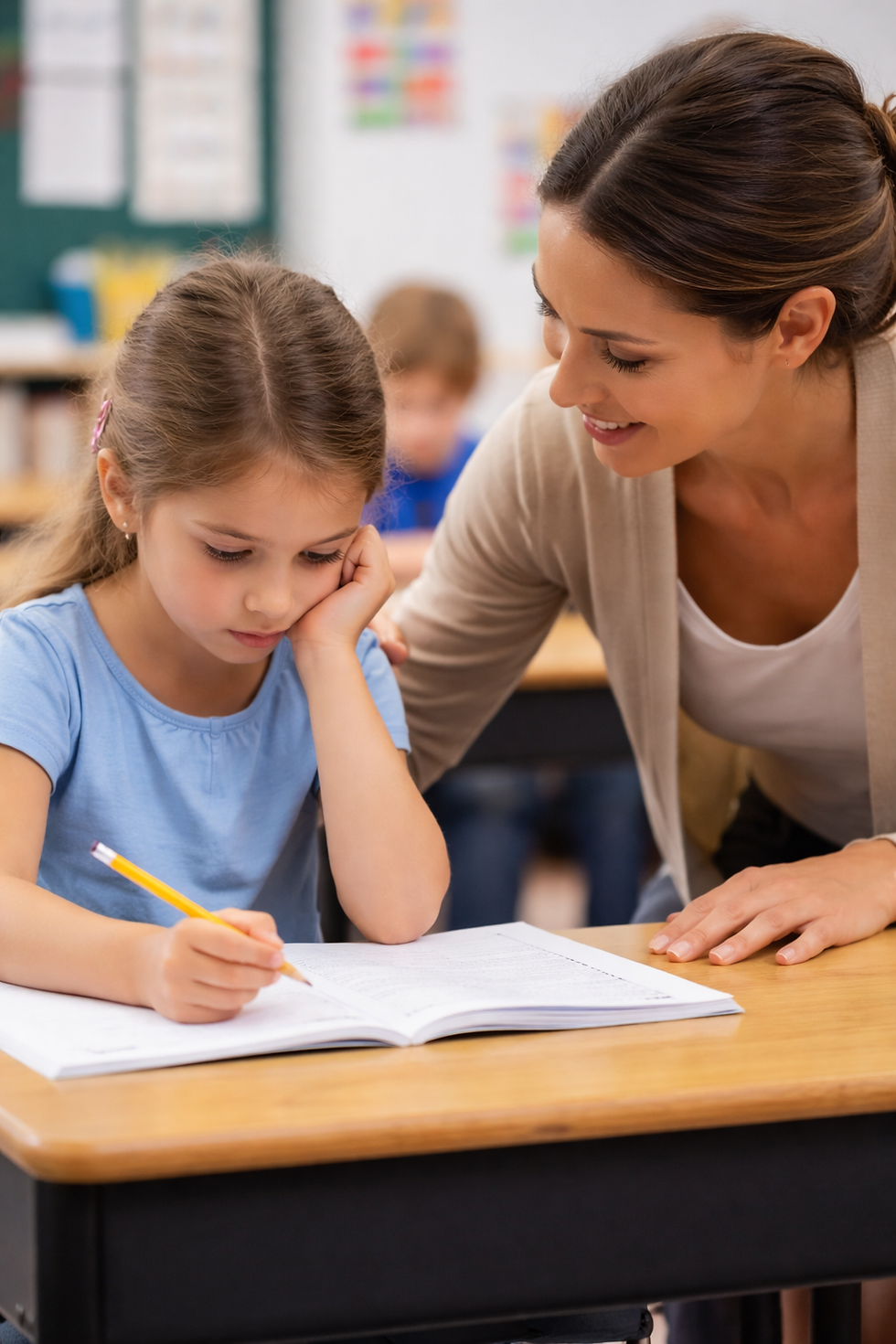
In the classroom, noticing emotional shifts is just as important as tracking attainment. Withdrawal, increased anxiety, or changes in behaviour may indicate that a learner is under strain.
Small adjustments can have a significant impact. Flexible pacing, clear instructions, and reduced public comparison help create emotionally safe learning environments. Responding to difficulty with curiosity rather than correction encourages re-engagement.
Building strong, trusting relationships remains central. When learners feel understood and supported by adults, they are far more likely to take risks, ask for help, and persist through challenge.
Measuring Success Beyond Attainment
Academic progress is important, but it should never be the sole measure of success in education.
Confidence, emotional safety, and engagement are just as critical to long-term outcomes. A learner who feels understood, supported, and capable is far more likely to persist, take risks, and continue learning over time.
When success is measured only through attainment, the emotional cost of struggling can be overlooked. Children may achieve on paper while experiencing anxiety, burnout, or loss of self-belief. These impacts matter, even when grades appear acceptable.
A future-ready approach to education values the whole child. It recognises that wellbeing and learning are inseparable, and that meaningful progress includes emotional growth as well as academic skill.
By looking beyond attainment and responding to struggle with understanding rather than pressure, we create environments where learners can thrive - not just cope.
Understanding the Emotional Impact of Struggling at School
The emotional impact of struggling at school is often less visible than academic difficulty, but it is no less important. When learners feel anxious, overwhelmed, or disconnected from school, learning becomes harder - regardless of ability.
Taking time to understand what sits beneath behaviour and emotional responses allows adults to offer support that is both effective and compassionate. Progress is more likely when emotional wellbeing is prioritised alongside learning needs.
If this perspective resonates, you may find it helpful to explore our related articles on confidence, literacy, and inclusive education, or learn more about our approach to supporting learners through emotional safety, understanding, and flexible support.
Support does not need to begin with urgency. It begins with recognising the emotional impact of struggling at school - and responding with care.


Comments